Marrisa Script: A Warm, Handwritten Font That Elevates Real Business Branding
Last Tuesday, I sat at my kitchen table—coffee cooling beside me—reworking the label design for a local candle maker’s new lavender-vanilla scent. She’d just switched to recyclable glass jars and wanted packaging that felt intentional, not “designed in a rush.” Her old labels used a generic script from a free font site: wobbly baseline, inconsistent spacing, and letters that looked like they were arguing with each other. Customers loved her scents—but the typography quietly undermined her care. That’s when I reached for Marrisa Script.
What Makes Marrisa Script Feel So Naturally Human?
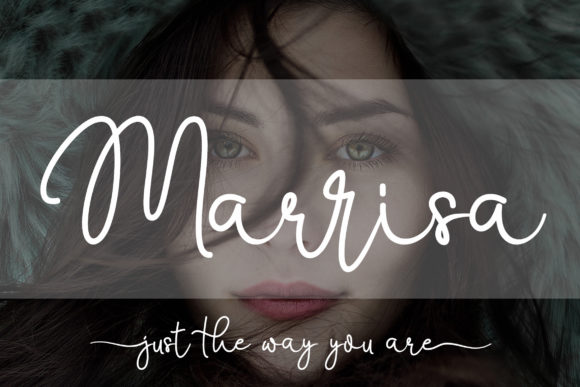
Marrisa Script isn’t just another “handwritten” font—it’s a Script Handwritten typeface with quiet confidence. The strokes have gentle contrast: slightly thicker downstrokes, airy upstrokes, and subtle tapering that mimics real pen pressure. There’s no forced quirkiness or over-the-top flourishes—just graceful connections, soft entry/exit strokes, and a rhythm that breathes. It reads as warm, approachable, and unhurried—like someone who takes time to write your name carefully on a gift tag.
As a creative consultant, I’ve tested dozens of script fonts on physical materials: printed product tags, matte-finish menu cards, kraft paper stickers, and Instagram story templates. Marrisa Script consistently holds up—not because it’s flashy, but because it’s legible without shouting. Its x-height is generous, letterforms are open, and spacing between characters feels intuitive—not cramped or overly loose. That matters more than you’d think when your candle label is 1.5 inches wide, or your boutique’s thank-you card fits in a standard envelope.
Where It Shines (and Where to Use It Thoughtfully)
Marrisa Script works best as a display font: ideal for logos, product names, short headlines, and decorative accents—not body copy or long paragraphs. Think of it as your brand’s signature, not its voiceover.
- Product labels & packaging: On a small skincare bottle or ceramic mug, Marrisa Script adds artisanal charm without sacrificing clarity. Pair it with a clean sans serif (like Montserrat or Inter) for ingredients or origin details.
- Café menus & bakery boxes: Used for section headers (“Our Daily Loaves,” “Seasonal Specials”) or the café name at the top, it brings warmth without looking dated or fussy.
- Social media graphics: It stands out beautifully on Instagram banners, Reel thumbnails, and Pinterest pins—especially against muted backgrounds or natural textures (linen, marble, wood grain).
- Thank-you cards & handwritten-style notes: When exported as high-res PNGs or used in Canva with proper kerning, it mimics real ink—ideal for brands that want to feel personal, not automated.
One note on readability: avoid using Marrisa Script below 14pt on printed materials or under 18px on mobile screens. Its elegance lives in medium-to-large sizes. For tiny jar labels or QR code footers, stick with its pairing partner—a simple, highly legible sans serif.
Smart Pairings That Keep Your Brand Cohesive
Typography isn’t solo work—and Marrisa Script was clearly designed to play well with others. Its relaxed energy balances beautifully with structured, modern fonts. My go-to pairings for small business clients:
- A friendly sans serif: Like Poppins or Open Sans—clean, neutral, and widely supported across web and print. Perfect for supporting text on packaging, websites, or email newsletters.
- An elegant serif: Try Playfair Display or Cormorant Garamond for editorial touches—think “About Our Process” sections or seasonal campaign headers.
- A second, simpler handwritten font: Only if needed—for example, using a minimal monoline script (like “Dancing Script” at light weight) for subheadings, while keeping Marrisa Script for the main logo or product title.
The goal? Consistency—not uniformity. Marrisa Script becomes your brand’s “signature moment”; everything else supports it without competing.
Practical Things to Check Before You Download
Marrisa Script is offered as a free font, which is wonderful—but always verify what’s included before using it commercially. Look for:
- File formats: Ideally OTF and TTF, so it works in Adobe apps, Canva, Cricut Design Space, and most desktop software.
- Ligatures & alternates: These small details—like a connected “Th” or a swash “y”—add polish. Marrisa Script includes several, and they’re easy to access in apps that support OpenType features.
- Commercial license: Confirm it allows use on physical products (candle labels, tote bags), digital templates (Canva shop bundles), and client projects. Most free fonts permit this, but always double-check the license file.
- Language support: If your audience includes Spanish, French, or Portuguese speakers, verify accented characters (ñ, é, ç) are included and well-designed.
I’ve used Marrisa Script on everything from hand-poured soy wax labels to boutique clothing tags—and each time, it helped the brand feel more considered, more human, and more memorable. Not because it’s “trendy,” but because it carries intention. In a world of fast-scrolling feeds and crowded shelves, that quiet intention is exactly what helps customers pause, connect, and remember.
It won’t fix a weak product or unclear messaging—but paired with thoughtful branding, Marrisa Script helps your business look like the care you put into it.